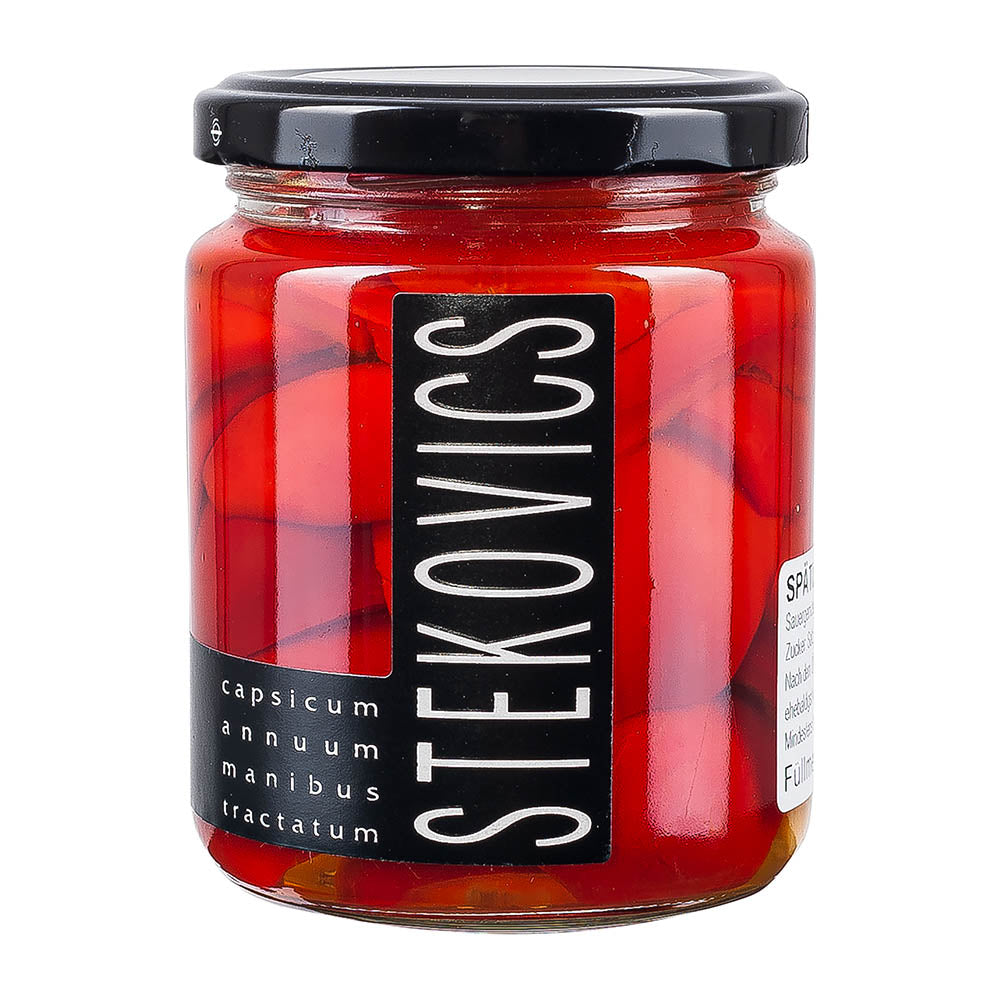
Paprika Spätlese I by Erich Stekovics, late harvest
Paprika Spätlese I by Erich Stekovics is the tomato pepper that is allowed to hang on the shrub for the entire summer and half of autumn. Only the long ripening process yields the sweetness that early-harvested produce cannot achieve, and pan-searing adds a fine roasted note.
Paprika Spätlese I is a pickled pepper from Erich Stekovics near Lake Neusiedl in Burgenland. The tomato pepper is harvested only in late autumn, then cleaned, sliced, and pickled in wine vinegar. The 250-gram jar contains 160 grams of peppers, along with sugar, salt, and garlic.
Sweetness from the sun, acidity from the vinegar
The pieces are generously sliced and thick-fleshed, so that when you bite into them, the juice hits first, followed by the acidity.
Up front is the distinct sweetness that only a pepper allowed to hang in the sun long enough can provide. Behind it, the acidity of the vinegar sets in, lean and clear, while the sugar in the brine binds both together. The darker the piece, the riper the pepper was, and the fuller the sweetness.
The garlic seasons the brine without overpowering the fruit. The variety is mild by nature, and it remains mild in the jar, deriving its spice from the garlic and vinegar.
Pickled peppers with cheese, bread, and roasts
The Spätlese has its place on a snack platter—the cold plate of bacon, cheese, and farmhouse bread—where its sweetness contends with the salt.
It is just as at home with roasted poultry as it is next to a pork roast, whose fat it cuts through with its acidity. Finely chopped, it goes into rice salad, pasta, or scrambled eggs, and on toasted bread with cream cheese, it makes for a quick appetizer.
Those who eat it cold from the jar experience the acidity most clearly; those who warm it briefly in a pan bring the sweetness to the fore.
Spätlese means the same here as it does with wine
The name comes from viticulture, where Spätlese (late harvest) refers to grapes that remain on the vine after the main harvest, accumulating sugar in the process. In wine law, Spätlese depends on a minimum must weight—the sugar content of the grapes—whereas in the vegetable garden, it simply depends on patience.
The same applies to peppers, as every week on the bush shifts the ratio of acidity to sweetness, while simultaneously increasing the risk that an early frost will cost the harvest. Stekovics accepts this risk because the late peppers make all the difference in the jar.
The tomato pepper is one of the old outdoor varieties from the lowlands around Lake Neusiedl; small, flat, and deeply ribbed, with a significantly thicker wall than a greenhouse bell pepper. It is precisely this wall that withstands pickling without turning soft.
Before pickling, the cleaned pieces are placed briefly in a hot pan, where they take on color before the vinegar is added. Stekovics uses a vinegar made from a Beerenauslese—that is, from noble sweet grapes—which gives the jar an additional fruit note.
A jar for unexpected guests
Unopened, the jar sits on the shelf for months, serving as a lifesaver when someone shows up at the door in the evening. Once opened, it belongs in the refrigerator, where it will keep as long as the brine covers everything. Its siblings await in the Stekovics pepper rarities, including the bolder Spätlese II and the apple pepper.
Contents 250 g – Drained weight 160 g