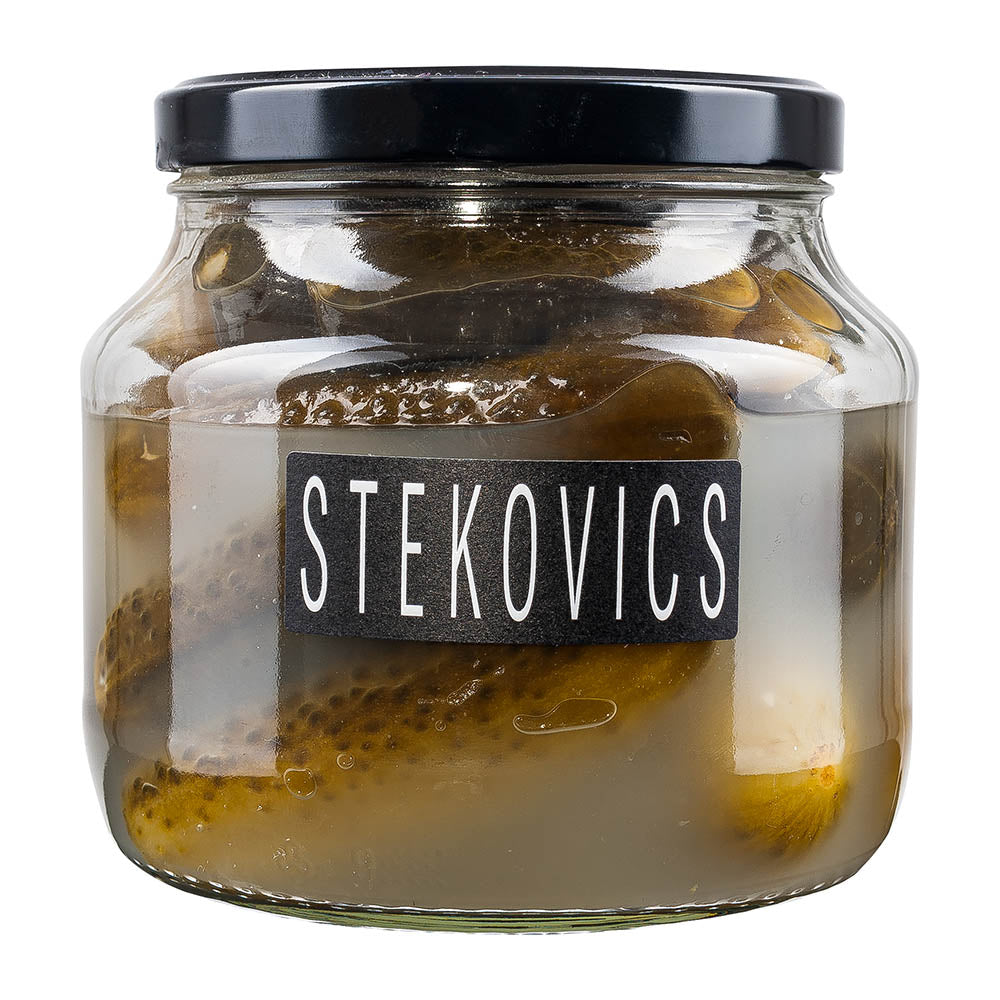
Salt-cured pickles by Erich Stekovics, lacto-fermented
Salt-cured pickles by Erich Stekovics ripen in a brine with garlic instead of being preserved in vinegar. Lactic acid bacteria do the work, giving the pickles a round, natural acidity that requires no sugar at all in the jar.
Salt-cured pickles are the fermented cucumbers from Erich Stekovics of Lake Neusiedl, the shallow steppe lake in Burgenland; they are golden-green, swimming in a slightly cloudy brine, and offer a firm crunch. The large jar is designed for a family and is perfect for a hearty snack or as a side at a barbecue.
Round acidity instead of sharp vinegar
The first bite sounds different than with a pickled cucumber—firmer and juicier—and the acidity is broad rather than sharp. It feels deeper and more organic because it developed within the jar rather than being poured in.
The garlic provides the savory base note, the salt holds the fruit together, and that completes the ingredient list. The slight cloudiness is part of the process and is not a flaw in the batch.
Each piece turns out a little differently—sometimes firmer, sometimes spicier—depending on how it grew on the vine. The skin remains a vibrant green and yields significantly when bitten into.
Erich Stekovics prepares them raw in the brine, which is why the fruit retains its core and the crunch remains even after months. Anyone looking for this round acidity instead of a sharp vinegar note will recognize the difference immediately.
For a snack, a burger, or in a salad
Take a whole pickle with a hearty snack; its acidity will refresh the palate between bites of bacon and mountain cheese.
Finely chopped, they belong in a potato salad, a remoulade, or a tartare, where they provide both freshness and crunch. In a burger, they replace any sweet pickle and stand up well against the meat. For a sausage sandwich, slice them thinly lengthwise so the acidity is distributed across the entire surface.
Alongside roasted meat or a hearty soup, they act like a refreshing glass of cold water. Keep the opened jar in the fridge and make sure the brine covers everything, and the last pieces will remain just as firm as the first.
What actually happens in the brine
Salt and water are the entire foundation; everything else is done by the lactic acid bacteria that live on the skin anyway. They transform the cucumber's sugar into lactic acid, and this acid preserves the vegetables without needing a single drop of vinegar.
The salt regulates the process by holding back unwanted germs and letting the lactic acid bacteria do their work. It takes two weeks for the brine to become cloudy and the flavor to transition. Erich Stekovics pickles the cucumbers fresh from the field, because stored produce turns soft in brine.
Finally, they are pasteurized so the process stops and the flavor remains consistent for months. This brings a method to the shelf that existed in every cellar in Burgenland long before the invention of the tin can. The process is as old as food preservation itself and required neither refrigeration nor sugar.
A large jar for the whole table
When several people are digging in, the family-sized portion is the right choice. It covers your supplies for a barbecue with guests, and whatever is left over keeps perfectly. Further jars from Erich Stekovics can be found among the rarities, including the tiny Melothria cucumbers.
Content 1,000 ml – Drained weight 600 g