


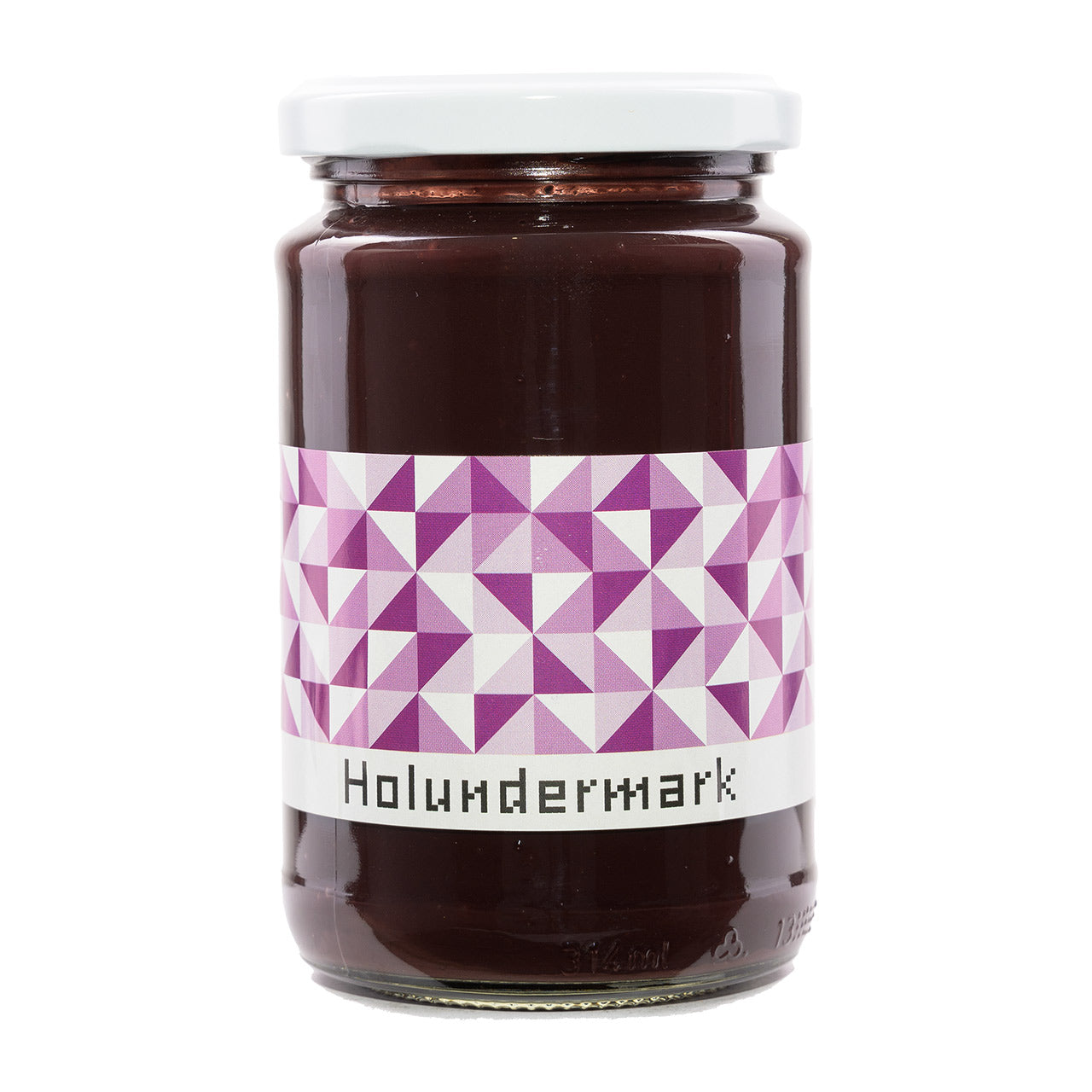
Elderberry pulp – made from pure fruit
Pure, clean, and full of flavor.
Couldn't load pickup availability


- Excellent Ratings
From 250,000 happy customers - Fast Customer Service
by phone, email, or chat - Family-owned since 2002.
only good things: our name – our philosophy.
Shipping & Delivery
Your order will reach you in just 1-2 days with DHL, DPD, or UPS for as little as €5.45. Shipping is free on orders over €99. Need it faster? Choose from our express shipping options.

Payment and Installment Plan
Your payment information is always processed securely. Choose from many payment methods such as PayPal, Klarna, Apple Pay, Mastercard or Visa and benefit from purchase on account and installment payments. You can find more information in our Payment Terms.
Questions about Elderberry pulp – made from pure fruit?
We are happy to help you with Antonio Viani Importe.
Elderberry pulp from whole berries, dark and tart
Elderberry pulp is the strained fruit flesh of the black elderberry, heated through and with no added sugar; it contains naturally occurring sugar. It flows rather than sits, and has a tart, acidic taste with the dark depth that has defined North German elderberry soup for generations.
The elderberry pulp from the Antonio Viani range consists of 100 percent elderberries, and nothing else. In a 290-gram jar, it contains naturally occurring sugar, 5.6 grams per 100 grams. Of all the pulps in this range, it is the thinnest, almost like a thick juice, and stains everything it touches a deep violet.
Not a berry, but a small stone fruit
What hangs in heavy clusters on the black elder bush are botanically not berries, but stone fruits, usually with three seeds inside.
Sambucus nigra belongs to the Adoxaceae family. There are over twenty species in this genus worldwide, three of which are native to Central Europe: black elder, red elder, and dwarf elder. The clusters ripen in August and September, when the panicles bend downward under their own weight.
In the north, the shrub is called "Flieder" (lilac) and the fruit "Fliederbeere," in the Bavarian-Austrian south it is called "Holler," and in the southwest "Holder." Three names for the same plant that grows along roadsides, in hedgerows, and behind barns without anyone ever having planted it.
Elderberries are never processed raw. The berries contain sambunigrin, which breaks down when heated, which is why every pulp is heated through before going into the jar. This one, too, has seen the kettle.
Elderberry soup with dumplings and more
On the palate, the pulp is tart and acidic, with a dark, almost earthy note reminiscent of the forest floor in late summer. The acidity leads, making it a counterpart rather than something cloying.
The most famous use is elderberry soup, a specialty of Northern Germany and Denmark, popular primarily in Schleswig-Holstein, Hamburg, and Mecklenburg-Vorpommern. For this, the pulp is thickened with water and starch, boiled with apple and pear pieces, lemon peel, and a clove, and served hot with small flour dumplings, known as "Klackerklümp," or semolina dumplings.
In Schleswig-Holstein, it is called "Knicksupp" because the elder grows in the "Knick"—the hedgerow between two fields. Autumn and winter are its seasons, and anyone who has eaten it prepared correctly understands why there is no substitute product for it.
Furthermore, the pulp is used in sauces for game, duck breast, and beef, makes red cabbage darker and rounder, and is spooned into yogurt, muesli, crepes, and sorbet. A tablespoon in a salad dressing can almost replace the vinegar. Once opened, the jar belongs in the refrigerator, and anyone working with it would be better off wearing an apron.
How a Northern light makes it onto an Italian shelf
Antonio Viani Importe GmbH is responsible for this range.
The fact that a North German classic like elderberry pulp is found in an Italian-influenced assortment fits the picture better than it might first sound: what is sought is quality, handmade products, not a passport.
Under its own house brand, Viani bundles four single-varietal pulps in the same jar: elderberry, rosehip, sea buckthorn, and quince. Its siblings on the shelf are the rosehip pulp and the sea buckthorn pulp, both also made from a single fruit.
More from this category can be found under Compotes and Preserves, and the complete assortment of the house in the collection Antonio Viani Importe. Dark, tart, uncompromisingly acidic. A pulp that makes no concessions.
Antonio Viani Importe
Antonio Viani Importe
Nutritional Information
Nutritional Information
Alcohol content
Alcohol content
Ingredients
Ingredients
Distributor
Distributor
Statutory Warranty
Statutory Warranty

nur Gutes: Your Gourmet Delivery for Delicacies and Wine Since 2002
How it all began: A passion for good food
Do you know that feeling? You return from your holiday with a bottle of olive oil from Portugal in your suitcase, a jar of fruit spread from South Tyrol, perhaps a bar of chocolate from a small factory in France – and you ask yourself: Why can't I find something like this at home? We asked ourselves the very same question. Over and over again.
We are Kerstin and Stephan Uhlenbusch from Nordhorn, a small town on the German-Dutch border in Lower Saxony. We have always been connoisseurs. On our travels through Europe, we made the most wonderful culinary discoveries: mountain apple juices from the South Tyrolean highlands, Breton barrel butter, handmade pasta from Italy, French sea salt, and much more. It was never the grand luxury products that fascinated us, but rather the honest, artisan foods made by people who are wholeheartedly dedicated to their products.
In 2002, we decided to turn this passion into our profession. We wanted to make good food accessible to as many people as possible – not just to those who are lucky enough to shop directly from producers. This is how "nur Gutes" (only Good Things) was born, initially as a local delicatessen in Nordhorn, and soon after as one of the first gourmet online shops in Germany.
Our name is also our philosophy: With us, you'll find only good things. Period.
Who we are: Delicatessen merchants, connoisseurs, industry experts
What distinguishes us from many other online shops is not just our product range, but above all our expertise and our network. Kerstin was the managing director of the association of leading delicatessen merchants in Germany – the industry association that unites the best owner-managed delicatessens in the country. In this role, she not only accompanied but actively shaped the German delicatessen industry. With the deli Festival, we also launched our own B2B trade fair for delicacies, which for years brought together producers, traders, and restaurateurs from all over Europe – a culinary salon of the highest class.
Through this many years of work at the heart of the German delicatessen industry, we have built up a unique network – with producers, traders, restaurateurs, and artisan food makers from all over Europe.
What does that mean for you as a customer? It's simple: We know our industry like few others. For more than two decades, we have built relationships with small manufacturers and passionate producers – directly, personally, and on an equal footing. Chambers of Commerce and economic development agencies from all over Europe regularly introduce us to new, exciting producers who want to offer their products on the German market. This network allows us to offer you products that you won't find in any supermarket and hardly any other online shop.
Our range: Delicatessen, wine and specialties from all over Europe
In our gourmet delivery service, you will find a carefully curated selection of fine foods, delicacies, wines, non-alcoholic beverages, and selected kitchen and home accessories. We carry approximately 9,000 items from manufacturers and producers in Germany, Austria, Italy, France, Portugal, Spain, England, Iceland, Denmark, Sweden, Greece, and the USA.
The range of our fine food assortment extends from exquisite basic ingredients to special gourmet moments. Whether you are looking for a high-quality extra virgin olive oil from Portugal, genuine Aceto Balsamico from Modena, Fleur de Sel from the Breton coast, or handmade spice blends – you will find it here. Our shelves are filled with fine fruit spreads and jams, aromatic honey, truffle delicacies, chutneys and mustard sauces, first-class canned fish such as vintage sardines and tuna, risotto rice, handmade pasta, and much more.
Our fresh delivery service brings delicacies like the legendary Beurre Bordier from Brittany, Italian burrata, the finest salami, or fresh bread directly to your home – securely packaged and chilled.
Wine, sparkling wine, and champagne from winemakers we know personally
Our wine selection is particularly close to our hearts. In the nur Gutes wine online shop, you won't find wines from all over the world, but from winemakers and wineries that we have personally visited and whose work we appreciate. Wine is a matter of trust, and we extend this trust to you. Whether it's white wine from Rheinhessen or the Palatinate, red wine from Austria or Burgenland, rosé for the barbecue season, natural wine for the adventurous, or sparkling champagne for special moments – here you will find quality that we stand behind with our name.
Many of our winemakers work organically or biodynamically. We support them on their journey and are delighted to share this development with our customers. Because good wine can not only taste excellent but also be produced in an environmentally friendly way, with respect for nature.
Our Philosophy: Hand-picked quality instead of mass-produced goods
What makes a product a "nur Gutes" product? We ask ourselves this question for every single item we add to our range. And the answer cannot be reduced to a single factor – it's a combination of craftsmanship, origin, ingredients, and the passion of the people behind it.
We ask many questions before a product finds its way into our shop. How is it made? Where do the raw materials come from? What philosophy does the manufacturer pursue? How limited is its availability? We quickly notice whether we are hearing marketing jargon or if a producer is happy to explain their journey and why they do what they do and how. This is exactly the enthusiasm we seek – and we find it again and again in the people behind our products.
Our quality criteria can be summarized as follows:
Artisanal Production: We prefer products from small manufactories and family businesses that often produce their culinary treasures by hand for generations. The careful processing and artisanal skill can be tasted in every bite.
Best Ingredients: For us, good quality begins with the raw materials. Whether fruits, vegetables, milk, meat, or grain – we ensure that our manufacturers rely on first-class, as natural as possible ingredients. A good ecological footprint characterizes the products we carry.
Origin and Regionality: We value products with a clear regional identity. A South Tyrolean mountain apple juice, consisting only of slow-ripened, old apple varieties. A Portuguese olive oil from trees that have shaped the landscape for centuries. These stories of origin make delicacies what they are.
Personal relationship with the manufacturer: We buy directly from the producer whenever possible. We have known many of our suppliers personally for years, some for over two decades. We visit them, taste together, and exchange ideas. This closeness is important to us because it guarantees transparency and trust.
And of course: The taste. At the end of the day, it has to taste good. We try all products ourselves – not just with a spoon when they are new, but again and again while cooking, at the table, on the plate. Only what convinces us, what we can call "nur Gutes," will you find in our shop. Our quality begins where the supermarket ends.
Sustainability and Responsibility: Our DNA, not a marketing trend
Regionality, sustainability, ecological and fair farming – for us, these are not buzzwords to be inserted into a text for search engine optimization. It is our DNA. Since day one.
When we talk about sustainability, we primarily mean one thing: respect. Respect for nature, for raw materials, for the people who produce our food, and for animals. This respect is reflected in many small and large decisions we make every day.
When selecting our products, we ensure that our manufacturers operate responsibly. Many of our producers are organically certified, others pursue sustainable approaches without carrying the official seal – because they act out of conviction, not because the market demands it.
For shipping and packaging, we try to keep our ecological footprint as small as possible. We send your order safely and break-proof – which is a real challenge for an assortment ranging from wine bottles to chip bags, jam jars, and kitchenware. Nevertheless, we pay attention to resource-saving packaging materials and avoid unnecessary waste wherever possible.
We actively combat food waste. Products with a short best-before date or minor packaging damage are offered in our sale section at reduced prices. Because "best before" does not mean "expired from" – and it would be a shame to simply throw away carefully produced delicatessen. Become a food saver and perhaps discover your new favorite product in the process.
The people behind the products: Our producers
What brings us the most joy in our work is accompanying true passionates on their journey. People whose drive it is to make a good product even better. Some of them have been with us since our founding – for over twenty years.
There's Thomas Kohl with his unique mountain apple juices from South Tyrol, made from old, slowly ripened apple varieties. Stefan Gruber and the wonderful Alpe Pragas fruit spreads. Stéphane and his Bonnat chocolates from France. Antonio Duarte from Monterosa and his outstanding Portuguese olive oil. Christina from Il Borgo del Balsamico. Johan Bülow and his famous Lakrids. Uwe König from the Bergisches Land, who, together with his wife, produces fruit spreads, mustard, and chutneys in small quantities in his Königskind gourmet manufactory – just like homemade. Susanne Backes-Keck from the Truffle Manufactory in Bavarian-Swabian Offingen, who has been processing hand-picked truffles into truffle delicacies since 2008.
These are just a few examples among many. Behind every product in our shop stands a person, a family, a story. And it is precisely these stories that make the difference between an interchangeable food and a true delicacy.
Your shopping experience at nur Gutes
We know: buying fine food online is a matter of trust. That's why we do everything we can to ensure your shopping experience with us is completely positive.
Personal advice: We are not an anonymous platform. Behind nur Gutes are real people whom you can reach at any time with questions. Whether you're looking for a recommendation for a special gift, want to know which wine pairs with your planned menu, or need advice on a specific product – we are happy and enthusiastic to help you.
Secure packaging: With over 20 years of experience in gourmet shipping, we know exactly how to safely deliver even the most delicate products to your home. Wine bottles, glasses, chip bags, and kitchenware arrive as they should: undamaged and ready to enjoy. Our delivery accuracy is 99.9 percent.
Fast shipping: We ship your order quickly and reliably. Shipping is free for orders over 99 Euros.
Trusted Shops certified: Your security is important to us. Our shop is Trusted Shops certified, and you can conveniently pay by invoice, PayPal, credit card, or instant bank transfer.
Gifts and hampers: Are you looking for a special gift for a connoisseur? We put together individual gift baskets and presents – for every occasion and every taste. From a small token of appreciation to a grand gourmet gift: you'll find the right thing with us.
From physical store to gourmet delivery: Our evolution
In the more than 20 years since our founding, much has changed – and at the same time, much has remained the same. Our commitment to quality, our passion for good food, and our personal interaction with customers and producers are the same today as they were on day one.
What has changed is the way we work. The stationary delicatessen in Nordhorn's city center has become an online shop shipping throughout Germany, with a modern operating building. In our warehouse, we efficiently and systematically organize around 8,000 items so that your order arrives quickly and correctly. But our physical store in Nordhorn is still there – if you're in the area, feel free to visit us in person. Here you can discover and taste products, and receive personal advice.
Over the years, we have learned what quality truly means. What makes a fine food product special, in its production and origin. This knowledge flows into every single item we select for you.
nur Gutes – because you only find good things with us
Whether you want to order fine foods online, are looking for a special wine, want to put together a gift for a loved one, or simply want to enrich your kitchen with high-quality ingredients: nur Gutes is the right place for you.
We look forward to taking you on a culinary journey of discovery. Through our assortment, which unites the best manufacturers in Europe. Through taste experiences that enrich everyday life. And through the certainty that behind every product lies a story worth telling.
Browse through our gourmet delivery service, let yourself be inspired, and conveniently order your favorite products to your home. Because in the end, it's all about one thing: enjoying.
Welcome to nur Gutes.
Kerstin and Stephan Uhlenbusch

-
 Vendor:Antonio Viani Importe
San Marzano Tomatoes, 'Vintage'
San Marzano tomatoes in a vintage-style tin for sauces and gifts
Content:Regular price 2,95€Sale price 2,95€ Regular priceUnit price 11,35€ per kg2,95€ -
 Vendor:Antonio Viani Importe
Porcini Mushroom Risotto
Creamy rice mixture with porcini mushrooms for a hearty primo piatto
Content:Regular price 6,90€Sale price 6,90€ Regular priceUnit price 23,00€ per kg6,90€ -
 Vendor:Antonio Viani Importe
Prosecco DOC Spumante Brut
To toast: Prosecco DOC Spumante Brut from Viani To toast and...
Content:Regular price 13,50€Sale price 13,50€ Regular priceUnit price 18,00€ per l13,50€ -
 Vendor:Antonio Viani Importe
San Marzano Tomatoes – in their own juice
Viani – San Marzano Tomatoes – in their own juice The San Marzano…
Content:Regular price 2,95€Sale price 2,95€ Regular priceUnit price 11,35€ per kg2,95€ -
 Vendor:Antonio Viani Importe
Cucunci – Caper Berries in White Wine
Mild caperberries from Salina, pickled in sweet Prosecco white wine
Content:Regular price 7,50€Sale price 7,50€ Regular priceUnit price 79,79€ per kg7,50€ -
 Vendor:Antonio Viani Importe
Pfund's Caramel Cream
Dulce de Leche Pfund's Caramel Cream is a wonderful...
Content:Regular price 5,95€Sale price 5,95€ Regular priceUnit price 23,80€ per kg5,95€ -
 Vendor:Antonio Viani Importe
Truffle Risotto – Risotto al Tartufo
Viani – Truffle Risotto – Risotto al Tartufo – 300g The Viani…
Content:Regular price 7,40€Sale price 7,40€ Regular priceUnit price 24,67€ per kg7,40€ -
 Vendor:Antonio Viani Importe
Capers – Small Capers in Salt
The coarse sea salt naturally preserves the small capers
Content:Regular price 6,25€Sale price 6,25€ Regular priceUnit price 52,08€ per kg6,25€ -
 Vendor:Antonio Viani Importe
Limoncello Il Convento
Limoncello – Lemon Liqueur by Il Convento Limoncello
Content:Regular price 19,50€Sale price 19,50€ Regular priceUnit price 39,00€ per l19,50€ -
 Sold outVendor:Antonio Viani Importe
Summer Truffles – whole summer truffles – 12.5g
Viani Tartufi Estivi – Whole Summer Truffles The Viani Tartufi Estivi…
Content:Regular price 6,90€Sale price 6,90€ Regular priceUnit price 690,00€ per kg6,90€ -
 Vendor:Antonio Viani Importe
Truffle Butter – Burro al Tartufo – 80g
Truffle Butter with White Truffles - Burro al Tartufo by Viani The...
Content:Regular price 12,90€Sale price 12,90€ Regular priceUnit price 161,25€ per kg12,90€ -
 Vendor:Antonio Viani Importe
Brutti ma Buoni – Hazelnut Macarons
They promise La Dolce Vita and they deliver.
Content:Regular price 6,25€Sale price 6,25€ Regular priceUnit price 62,50€ per kg5,99€ -
 Vendor:Antonio Viani Importe
Olive oil with white truffle flavor
Viani Tuber l'olio — extra virgin olive oil with truffle aroma, 100 ml
Content:Regular price 12,50€Sale price 12,50€ Regular priceUnit price 125,00€ per l12,50€ -
 Vendor:Antonio Viani Importe
Valdueza Red Wine – 2021
Full-bodied Spanish red wine made from international grape varieties
Content:Regular price 13,50€Sale price 13,50€ Regular priceUnit price 18,00€ per l13,50€ -
 Sold outVendor:Antonio Viani Importe
Prosciutto Crudo – Italian Ham
30 Months Devodier Prosciutto Crudo from Emilia Romagna…
Content:Regular price 11,50€Sale price 11,50€ Regular priceUnit price 143,75€ per kg11,50€ -
 Vendor:Antonio Viani Importe
Sea buckthorn purée - from pure fruit
Sea Buckthorn Pulp – unsweetened – 290g Sea Buckthorn Pulp without...
Content:Regular price 8,20€Sale price 8,20€ Regular priceUnit price 28,28€ per kg8,20€ -
 Vendor:Antonio Viani Importe
Cipolle – red onions
Crisp red onions pickled in sweet and sour brine, ideal with cheese
Content:Regular price 10,50€Sale price 10,50€ Regular priceUnit price 40,38€ per kg10,50€ -
 Vendor:Antonio Viani Importe
Rose hip purée – made from pure fruit
Pure, clean, and full of flavor.
Content:Regular price 6,70€Sale price 6,70€ Regular priceUnit price 23,10€ per kg6,70€ -
 Vendor:Antonio Viani Importe
Wild Boar Crostino – Wild Boar Pâté
Tuscan game pâté with red wine and chocolate for crostini
Content:Regular price 7,50€Sale price 7,50€ Regular priceUnit price 41,67€ per kg7,50€ -
 Vendor:Antonio Viani Importe
Bruschetta
Cascina San Giovanni Bruschetta - Tomato Dip from Piedmont With...
Content:Regular price 5,25€Sale price 5,25€ Regular priceUnit price 29,17€ per l5,25€ -
 Sold outVendor:Antonio Viani Importe
Zabaione cream with Marsala
in the glass – Zabà di Alberto Zabà di Alberto that's the finest...
Content:Regular price 10,50€Sale price 10,50€ Regular priceUnit price 52,50€ per kg10,50€ -
 Sold outVendor:Antonio Viani Importe
Colomba Paradiso
Discover the Galup Colomba Paradiso for Easter The Galup Colomba...
Content:Regular price 29,90€Sale price 29,90€ Regular priceUnit price 39,87€ per kg29,90€ -
 Sold outVendor:Antonio Viani Importe
Traditional Colomba – 750g
Italian Easter cake with nut glaze, almonds, and pearl sugar
Content:Regular price 29,90€Sale price 29,90€ Regular priceUnit price 39,87€ per kg29,90€ -
 Sold outVendor:Antonio Viani Importe
Elderberry pulp – made from pure fruit
Pure, clean, and full of flavor.
Content:Regular price 6,80€Sale price 6,80€ Regular priceUnit price 23,45€ per kg6,80€


